
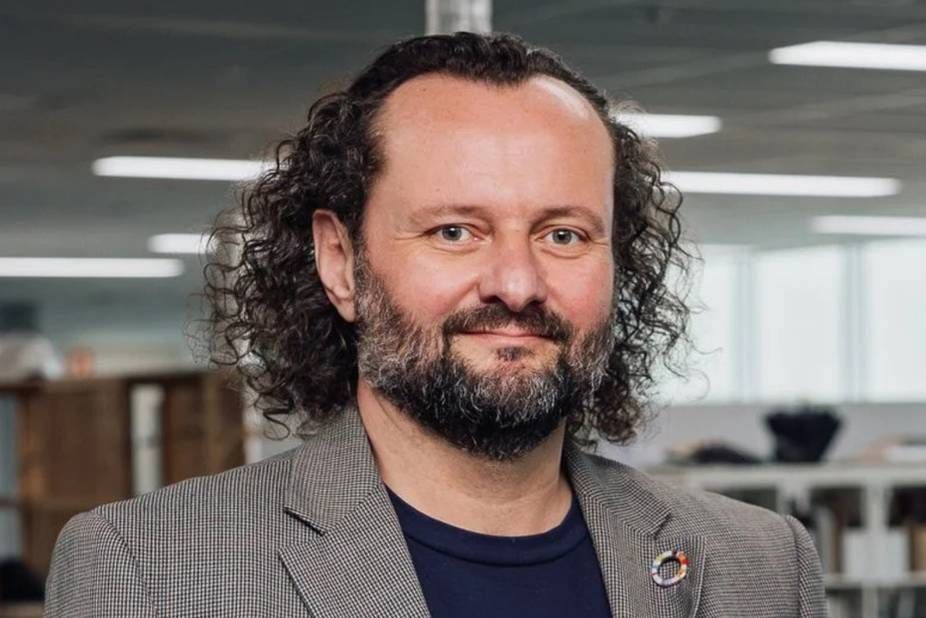
"We have to fix the big things. But we also have to fix all the small things," emphasises David Hauser, ELIoT Energy’s founder.
When most people think about reducing emissions, they picture solar farms, wind turbines or electric vehicles. David Hauser thinks about refrigerators.
Not the giant refrigerated warehouses that power Australia's food supply chain, but the millions of ordinary refrigerators, freezers, vending machines and cool rooms humming away in cafés, restaurants and grocery stores across the country.
Individually, they’re insignificant, but collectively, they consume enormous amounts of electricity.
"It's the small things that people don't think about," David says.
Through his startup, ELIoT Energy, he's building plug-and-play battery technology that allows refrigeration appliances to automatically store and use cleaner, cheaper energy.
His smart batteries can reduce electricity costs by up to 72 per cent while significantly lowering carbon emissions.
But long before he became a climate-tech founder, David was a curious kid, wondering why people couldn't live in better harmony with nature.
Learning from the land
David grew up on a traditional mixed farm in rural Germany.
“By Australian standards, it was tiny,” he says. “Our family raised dairy cattle, pigs and chickens, grew grain and potatoes, and we managed a small forestry operation.”
It wasn't large enough to be financially viable on its own, but it gave David a front-row seat to the delicate relationship between people and the environment.
"No farmer wants to hurt nature," he says. "But everything we do as humans disrupts the balance."
Watching that balance shift left a lasting impression and he became fascinated by the idea that people could develop technology that worked with nature, rather than against it.
A new scene and a new perspective
Australia appealed to David because it felt both familiar and completely different.
An Australian company offered him the opportunity to relocate, and he quickly embraced the chance.
Before long, he'd bought a four-wheel drive and began exploring the outback. Travelling through some of the country's most isolated landscapes only reinforced his appreciation for nature.
"We exploited fossil resources in just 100 years that took around 100 million years to create," he says. "It should make us all think a little more about how we interact with the environment, and how we protect it for future generations."
For David, climate action has always been about making better decisions every day.
An unexpected opportunity
ELIoT Energy wasn't David's first startup.
In 2023, while participating in Antler's startup program, he began developing a plug-in residential battery that renters could use without expensive electrical installation.
The concept had already gained traction in Europe, where apartment dwellers commonly install balcony solar panels and portable battery systems.
Australia proved very different. Local regulations made widespread adoption difficult, forcing David and his co-founder to rethink their approach.
Then an unexpected conversation changed everything. Coca-Cola approached the team with a challenge.
Across its global network, the company operated around one million refrigerated appliances, each consuming electricity around the clock and contributing significantly to carbon emissions.
It revealed a much bigger opportunity than home batteries. David realised millions of smaller commercial refrigeration units faced the same problem.
Unlike large industrial refrigeration systems, these appliances were simply plugged into wall sockets and for many, installing expensive external controllers wasn't commercially viable.
David knew there had to be an easier solution.
Rethinking the humble refrigerator
The answer became ELIoT Energy.
Rather than redesigning refrigeration equipment itself, David's team developed a smart battery that sits between the appliance and the power socket.
Customers simply plug the battery into the wall and connect their refrigerator or freezer. From there, the system does the rest.
Using machine learning, it learns how each appliance consumes electricity while analysing weather forecasts, renewable energy availability and electricity market conditions.
It automatically charges when renewable energy is abundant and inexpensive, then powers the appliance later when electricity prices are higher or the grid is relying more heavily on fossil fuels.
The result is lower electricity bills without changing how the appliance operates.
Just as importantly, each connected refrigerator can reduce its carbon emissions by around half a tonne each year, according to ELIoT Energy's pilot programs.
Why the smallest problems matter
David believes the world's energy transition won't succeed by focusing only on large infrastructure. It also requires solving millions of smaller challenges.
Hospitality businesses provide a perfect example. Refrigeration can account for between 50 and 80 per cent of a venue's electricity consumption because it operates continuously.
Multiply that across Australia's cafés, restaurants, supermarkets and convenience stores, and the numbers become enormous.
Then consider the global picture. As temperatures rise, demand for refrigeration will continue increasing.
Billions of people living in warmer climates will require greater access to cooling technologies in the decades ahead.
If we focus on fixing the small things and millions of small appliances become more efficient, the combined impact becomes anything but small.
Building momentum
Although ELIoT Energy officially launched in July 2024, the company has already demonstrated encouraging early results.
The technology has been validated through pilot programs in cafés and a brewery in Port Melbourne, supported by FB IDEAS (The Fishermans Bend Innovation Diversity Experimentation and Activation).
Initial results showed electricity cost reductions of up to 72 per cent while also providing valuable operational data.
The company has since secured its first paying customer, along with additional government grant funding to expand future pilot programs with larger organisations.
David's long-term vision is ambitious.
By 2031, he hopes ELIoT Energy will have deployed around 40,000 batteries across Australia.
This creates a distributed virtual power plant capable of storing around 200 MWh of green energy while reducing carbon emissions by approximately 20,000 tonnes annually.
Powered by community
As a relatively new member of Stone & Chalk, David says the value has become obvious almost immediately.
Within weeks, he'd reconnected with organisations including Catalysr and Race for 2030 while meeting founders working in complementary industries.
Those conversations have already opened doors to potential partnerships, investor introductions and commercial opportunities.
"People are incredibly generous," he says. "They open doors, make introductions and genuinely want to help."
For a founder building complex hardware in Australia, an area David believes often receives less support than software startups, that sense of community has been invaluable.
Looking beyond the battery
David sees ELIoT Energy as one piece of a much larger puzzle.
Every appliance that shifts its electricity use towards cleaner energy helps reduce pressure on the grid.
Every café that lowers its electricity bill makes sustainability more affordable, and every small improvement contributes to a much bigger outcome.
Growing up on a farm taught David that ecosystems depend on countless small interactions working together.
Now, David believes the path to a more sustainable future won't be defined by a single breakthrough, but by solving thousands of overlooked problems, one innovation at a time.
