
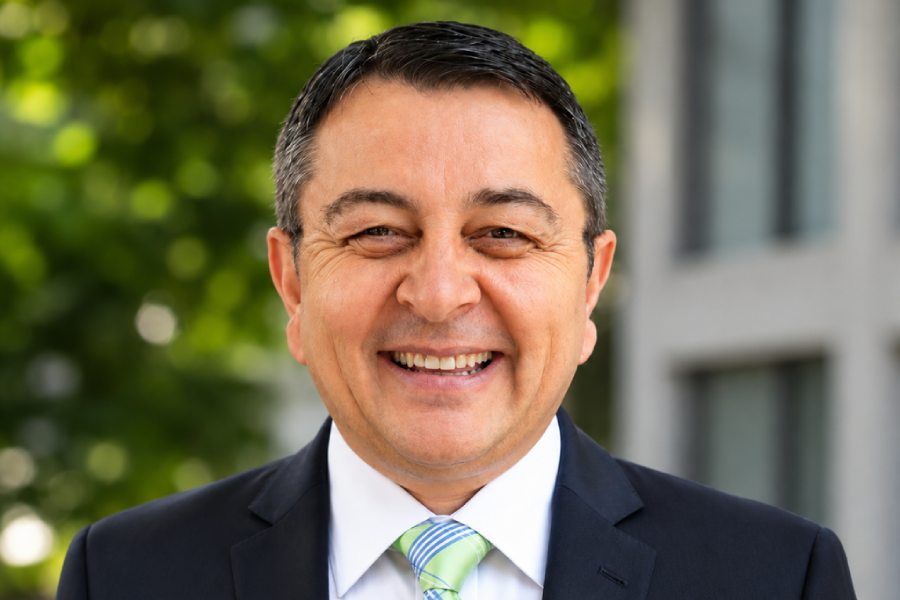
“I felt that there was some unfinished business from 1989 and 1990,” says Vas Nikolovski, Founder of Feezi.
More than three decades ago, Vas was a young lender, who watched people take out personal loans at punishing interest rates to pay for healthcare they needed.
Vas never forgot those customers. Now, they’re the inspiration for his startup Feezi.
Making it easier to pay for medical treatment
Feezi is a licensed healthcare payment platform to help Australians cover the out-of-pocket costs of medical treatment.
Even when treatment is approved and surgery is booked, patients can be asked to pay hundreds or thousands of dollars before it can go ahead.
This could be a ‘gap’ payment left over after Medicare or their health fund has paid, or an ‘excess’ required by a private health insurer before a hospital admission. This can typically be between $300 and $3,000, or sometimes, even higher.
Feezi helps patients cover these upfront costs so they can receive care when they need it, rather than when they can afford the payment.
Patients repay what they owe in equal weekly instalments, while their healthcare provider receives payment in full on the day. Providers pay no fees or commissions, and patients remain free to choose their own provider.
Vas describes Feezi as a “third door” – a way to complement, rather than replace, Australia's public and private healthcare systems.
A problem that started in 1989
Vas has spent much of his career in lending and banking, alongside a parallel career in corporate aviation.
He founded Australian Mortgage Managers and Australian Corporate Jet Centres, which grew into one of the country’s largest corporate aviation organisations.
But the healthcare problem that would eventually become Feezi first caught his attention when he was working as a young lender for American finance company Avco.
Customers would come into the branch looking for personal loans, and Vas noticed that a surprising number were borrowing money to pay for healthcare.
The amounts were often relatively modest, however, the interest rates were anything but. At the time, borrowers could be paying 26, 27 or even 28 per cent.
“I had a lot of customers come in that borrowed $3,000, $4,000, $5,000 or $6,000 in order to try and get healthcare,” he says.
At the heart of Feezi is a simple philosophy: when people are already facing financial pressure, the last thing they need is more of it.
Personal experience and lessons
Vas grew up in a family of factory-worker immigrants, where his parents used credit lines to bridge the periods when money was tight.
The interest they paid was astronomical, but at certain times it was all they could do.
He came to understand the distinction between being unable to afford something entirely and simply being unable to find the money at a particular moment.
Healthcare, he realised, was no different.
After building his other businesses, Vas began thinking seriously about what a different healthcare payment solution could look like.
What emerged was a design rule he calls the patient-first principle: every decision in the business is tested against whether it leaves the patient better off at the moment they need care.
It is why providers are never charged and never paid a commission, why nothing a patient owes can grow after they have agreed to it, and why the patient – not a referral arrangement – decides where they are treated.
Three years ago, he began working on a solution. It would become Feezi, a name drawn from the combination of ‘fee’ and ‘easy’.
Stepping into the problem
Vas immersed himself in the problem to better understand the barriers patients face when accessing care.
One problem became particularly clear when he spent time observing, with permission, at a major Australian medical imaging clinic.
He asked a staff member: “I’ve seen a lot of people come through here today. How many of those people actually have to pay out of their own pocket?”
The answer surprised him. “Almost all” patients paid something out of pocket.
At that clinic he learnt about the personal costs attached to X-rays and ultrasounds, and was struck by the cost of cortisone injections.
He was told that patients could face an out-of-pocket cost of around $600 despite Medicare covering part of the treatment. Some needed to return weeks later for further treatment.
“These are the problems we want to solve,” Vas says. “This is the time we want to be able to help that patient who has the cash flow, just not the cash on the day.”
A broad and pressing problem
The issue extends well beyond radiology. In May 2025 health fund GMHBA (Geelong Medical and Hospital Benefits Association) commissioned national research into why privately insured Australians delay hospital care.
It found that one in two people with hospital cover had delayed or avoided surgery because of the excess payable upfront.
Across the rest of the health system the pattern is the same.
Australian Bureau of Statistics data for 2024–25 shows that one in six Australians delayed or did not see a dental professional because of the cost, rising to almost one in four in the most disadvantaged households.
Whether it is a specialist appointment, surgery, dental treatment, diagnostic imaging or an assessment such as ADHD or dyslexia, Feezi helps patients cover the remaining gap and get the treatment or diagnosis when they need it.
This is important, because delaying treatment or diagnosis can lead to bigger health problems, greater strain on the healthcare system, and a larger financial burden on the patient in the end.
Why Feezi isn’t simply buy now, pay later
Vas describes Feezi as a “conflict-free” way to pay for healthcare, because there is no merchant relationship between Feezi and the healthcare provider.
The provider is never charged a fee and never paid a commission. Patients can use the platform with the provider of their choice, rather than being steered towards a particular practitioner or clinic because of a commercial arrangement.
The transaction is also tied specifically to healthcare. Feezi is designed to use medical coding to confirm that funding is being used for an eligible medical purpose rather than general consumer spending.
That independence is central to Vas’s vision. If someone needs healthcare, the decision about where they receive it should remain with them.
The economics are deliberately simple. Feezi charges no interest at all.
Instead, it funds the gap or excess under what the company calls its 3F model (flat fee funding): a single, fixed charge, disclosed in full before a patient commits to anything, which never compounds and never changes.
There are no application fees, no late fees, no default fees, no dishonour fees, no collection fees and no cost for paying out early. The figure a patient agrees to on day one is the figure they repay, and nothing Feezi does afterwards can make it larger.
The business is built on volume rather than on charging healthcare providers or charging patients interest.
Vas knows it’s ironic that a man who once balked at paying 28 per cent interest now runs a funding business, and he doesn’t shy away from it.
“The difference is that the number never moves,” he says. “You know the total on day one, it’s capped, and nothing we do can make it bigger. That was never true of the loans I used to write.”
Feezi operates under the low cost credit contract framework introduced by the Commonwealth in 2024, which regulates short-term, fee-based funding of this kind.
Building Feezi at Stone & Chalk
For a founder building a fintech in healthcare, access to the right community has been important.
At Stone & Chalk, Vas says the company has made valuable connections with founders at a similar stage, including another startup whose offering complements Feezi’s.
The management team has been supportive, and sessions on capital raising and the use of AI in health have helped as Feezi prepares to launch.
For Vas, those connections are particularly valuable because Feezi sits across several worlds: healthcare, lending, technology and regulation.
The challenge is not just building a payment platform, but creating a resource patients can trust, healthcare providers can use without being financially burdened by it, and regulators can be comfortable with.
The care you need, when you need it
For Vas, the long-term vision is that a patient encounters a hospital excess or gap payment, opens an app and arranges manageable repayments, without putting off the care they need.
It is a future he is working towards as Feezi prepares to test its model with patients and healthcare providers.
More than three decades after he first met people borrowing at high interest rates to pay for medical treatment, Vas is determined that Feezi will offer a better answer.
He imagines a patient facing hospital excess being asked a question: would they like to spread the cost over four instalments, without interest?
“It gives me goosebumps every time I talk about it,” he says.
For Vas, success means that when someone needs healthcare, the amount required on the day is not what stands in the way.
Feezi Pty Ltd holds Australian Credit Licence 577316.
