
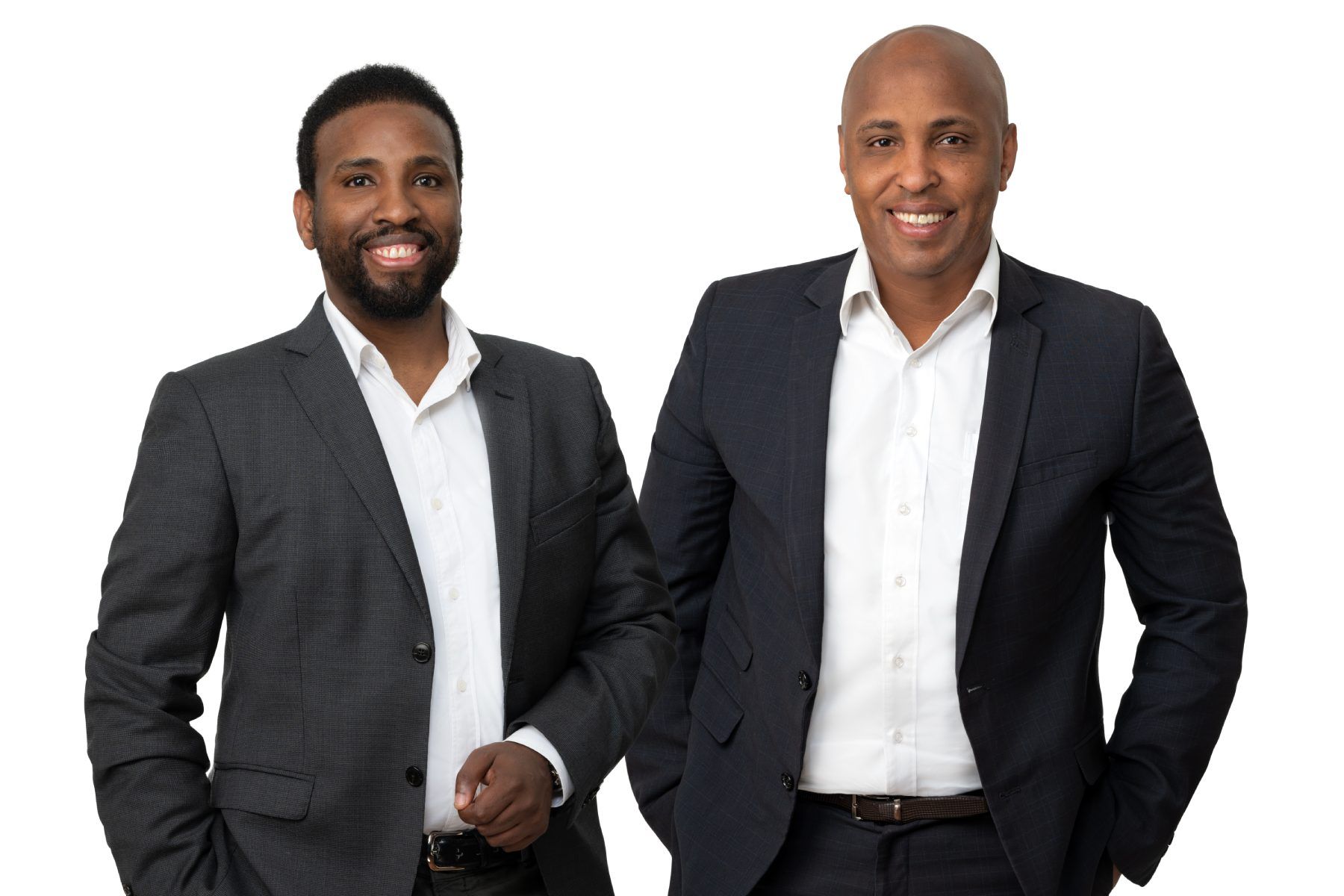
“We believe everybody should have access to financial inclusion, regardless of where they are in the world,” says Nuradin Omar, Co-Founder of fintech startup MasterRemit .
MasterRemit lets people send money to family and friends in more than 50 countries, including places where access to traditional banking is limited.
But MasterRemit started with a much more personal problem.
A problem close to home
In 2016, Nuradin was visiting his mother when her phone rang. A family member back in Somalia was urgently asking her to send money.
It was Saturday night and the local money transfer agents were closed. Nuradin’s mother would have to wait until Monday before she could send the money.
For someone facing an emergency thousands of kilometres away, two days was a long time to wait. Unable to help his mother, Nuradin left her house thinking there had to be a better way.
“I thought, I can build an app and a website where someone like my mum can send money back home instantly, regardless of the time.”
At the time, Nuradin was working in the corporate world.
A software engineer by training, he had moved into project management, but the problem stayed with him.
What began as an idea to solve his family's problem would eventually become MasterRemit.
“I didn't know that almost 100 million people had the same problem as my mum,” says Nuradin.
A family problem becomes a business
Nuradin and his brother Hashim migrated to Australia as children in the early 90s.
Their experience of living between cultures gave them personal knowledge of the importance of being able to support family members overseas.
When Nuradin first began thinking about MasterRemit in 2016, however, he wasn't necessarily imagining the company it would become.
“Back then, I never would have believed that MasterRemit would be where it is today,” he says.
In fact, when he registered the company's domain, he only registered it for one year.
“I never thought I would be going another seven or eight years,” he exclaims.
The determination was there, but the scale of the opportunity wasn't yet clear. What Nuradin had initially seen as his mother's problem turned out to be shared by millions of people around the world.
Nuradin convinced his brother Hashim to be his co-founder, and together they launched MasterRemit in January 2019, initially serving four countries.
The business has since expanded its reach to 50 countries worldwide, with more than 349,000 customers and it has processed more than 1.9 million transactions.
The company is now also raising a Series A round as it looks to expand further internationally and develop more products around its core cross-border payments offering.
More than a money transfer
MasterRemit is trying to solve a problem more complicated than moving money from one bank account to another.
For many people around the world, access to traditional banking is not straightforward. Opening an account can involve paperwork, eligibility requirements or barriers that simply don't exist in countries like Australia.
In some parts of the world, mobile phones and digital wallets have effectively become an alternative to traditional banking, allowing people to receive money using a mobile number rather than a conventional bank account.
This is where MasterRemit found an opportunity to make a difference.
By connecting people to digital wallets and other forms of payment, the platform brings financial services within reach of people who might otherwise be excluded from the formal financial system.
Nuradin refers to these people as “unbanked individuals”.
For Nuradin, financial inclusion is central to the company's purpose.
“Our mission is solving financial inclusion; solving the problems of the unbanked people. I think that's something that they align with us,” Nuradin says.
Help from afar
For migrants, being able to send money home can make a real difference to their families.
Some transfers help cover one-off expenses. One customer sent money for his children’s school supplies. Another helped his grandmother pay medical bills, while a third supported his brother’s home renovations.
For other families, the support has helped them build businesses and increase their earning potential.
Others help families build businesses and earn more. In Kenya, money from family helped a small farm expand by paying for equipment, seeds and supplies. In Ghana, support from a father living overseas helped his son start building a cocoa export business.
The benefits can also reach the wider community. A transfer from Australia helped establish a village soccer hub, giving local children a place to play, build friendships and develop confidence.
“They're the things that wake me up in the morning,” he says.
Some stories are deeply personal. One woman contacted Nuradin privately to ask if she could send money to her sister, who was in labour and on her way to hospital.
“She said she's in a car going to hospital right at that moment,” he recalls.
They worked together to quickly solve the problem, and the money was sent and received. A healthy baby was born.
For Nuradin, it was a reminder that what might look like a routine financial transaction on a screen can have real consequences for the person waiting on the other side.
“In some countries, if you don't pay at the hospital, they will literally not put you in line,” he says.
Building trust through community
When MasterRemit launched, it was entering a market where trust was particularly important. People were relying on the company to deliver money to their parents, children, siblings and friends.
Nuradin believes the company’s Australian roots and close ties with migrant communities have helped build that trust.
“We do a lot of community engagement events. We have a strong connection with local communities, whether it’s Filipino, Nepalese or Sri Lankan. We try to build relationships through community engagement rather than just presenting them with a business proposition,” Nuradin explains.
These events also helped Nuradin understand what customers needed. Some wanted faster transfers, while others needed lower fees or an easier way to send money. Those conversations helped shape the service.
Likewise, rather than relying solely on traditional advertising, the team has focused heavily on community engagement and word of mouth.
“The majority of our customers came from people telling others about the good things about MasterRemit,” Nuradin says.
Building with his brother
Nuradin is also building MasterRemit with someone who has been alongside him from the beginning: his brother Hashim.
The two have different strengths. Nuradin describes himself as the strategy person, while Hashim focuses more on operations.
That division has helped them work together while bringing different perspectives to the business.
The brothers have now spent years building a company around a problem that began within their own family. Their mother, fittingly, is a MasterRemit customer.
“She is the catalyst,” Nuradin says.
A new chapter for MasterRemit
In August 2026, MasterRemit rebranded to put the people behind its transfers at the centre of its identity.
Nuradin wanted the brand to tell those stories. A parent supporting their children. A family helping a loved one through an emergency. Someone making sure the people they care about have enough.
Each transfer carries something personal: love, responsibility, hope or a connection to home.
That thinking also shaped MasterRemit’s app and digital products, with a focus on making the experience fast, welcoming and easy to understand.
Finding support in the startup ecosystem
MasterRemit has had an office at Stone & Chalk for almost six years.
For Nuradin and his team, it has provided a place to work, connect with other founders and find support as the business grows.
“We’ve had a lot of collaboration and networking, help raising capital, and talking to people in the same ecosystem,” he says. “Those kinds of things help us a lot.”
The reality of building a fintech
The journey from side project to growing fintech has also changed Nuradin's life dramatically.
Before MasterRemit, he was accustomed to corporate working hours. He could finish work, go home and switch off. Now, he says, the laptop stays on and the working week stretches to seven days with many hours accumulating.
He laughs when asked whether he thinks the pace will eventually slow down.
“If you asked me two years ago, I would have said yes,” he says. “But if you're asking me now, I would say no.”
Yet, there is little sense of regret.
“I’m passionate about it,” he says. “I wouldn’t be able to keep going if I didn’t love what I’m doing.”
Final thoughts
As MasterRemit has grown, so too has Nuradin's understanding of the scale of the problem he set out to solve.
What began as a way to help his own mother send money home has become a platform supporting families across more than 50 countries.
Every new customer represents another family, another need and another reason someone is sending money to the people they love.
The technology may have changed since that first phone call, but the underlying purpose remains much the same.
Someone, somewhere, needs to help the people they love. Now, they don't have to wait until Monday.
