
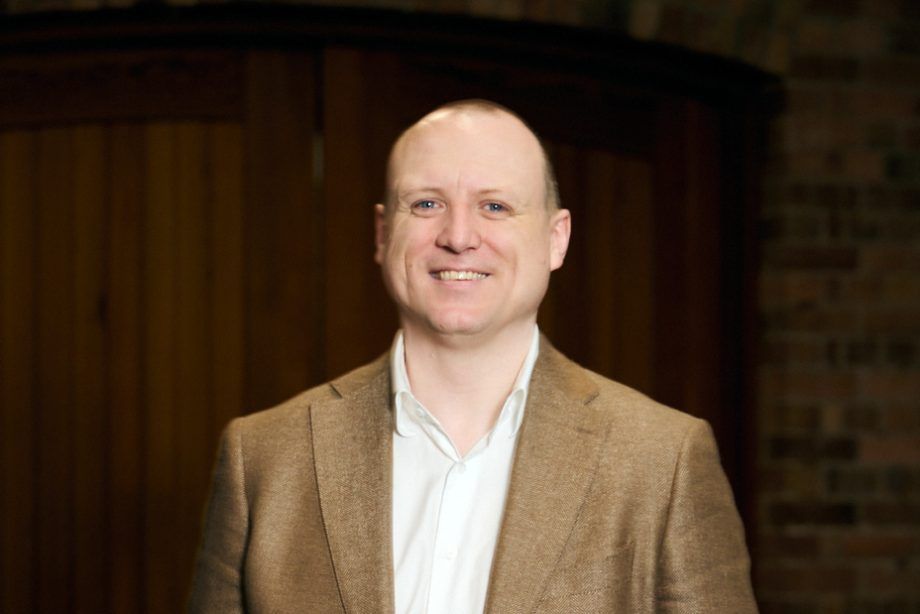
“I’m working as hard as I can to lose you as a customer. In fact, if you come back to our website after you’ve written an application, it says, ‘We’re very sorry to see you again,’” laughs Adam Chesters, Founder of Wrote It Myself.
It’s an unusual proposition for a technology company, but Wrote It Myself is taking a different approach to job seeking. It’s putting the human back at the centre, while using advanced AI to do the heavy lifting behind the scenes.
The AI platform helps job seekers research potential employers, understand the role, tailor their applications and prepare for interviews, without writing the application for them.
Rather than handing your future over to an AI bot producing another generic cover letter, Wrote It Myself learns the candidate’s experience, voice and communication style, then uses AI to research the organisation and identify where that experience could add value.
The technology does the research and analysis while the candidate still does the selling.
To sell yourself and learn about others
For most of his working life, Adam has had to sell himself.
He has worked for himself, contracted, consulted and sat on hiring panels. He has recruited people, worked with recruiters and watched candidates try to explain why they are the right person for a job.
There was only one period, he jokes, when he got to sit on a beach, collect annual leave and enjoy the feeling that he had discovered “the best scam mankind has ever invented”.
His career has taken him through technology, events, operations and major projects.
Earlier on, he spent seven years building a community-focused technology and music business in Adelaide, supporting niche artists and helping them find audiences and promote themselves.
The business eventually grew into a combination of online radio, events, media and coworking space, with more than 200 DJs and tens of thousands of followers.
After selling the business, Adam moved into contract roles, working across major events including Formula 1, the Melbourne Cup and Ultra Music Festival, as well as technology projects for organisations including the Future Fund.
“The founder skill set really does travel,” Adam says.
A new application
Across very different industries, the underlying skill remained the same: understand a problem and work out how to solve it.
That mindset eventually shaped the way he approached job applications.
Rather than immediately responding to a job advertisement, Adam would research the company, look at what was happening in the business and try to understand why the organisation was hiring.
“The funny thing is that when you can speak to the pain point, then that’s how you win,” he says. “You don’t necessarily sell a product. You sell a solution.”
He started wondering whether AI could help other people take the same approach without taking the human voice out of the process.
That question became the starting point for Wrote It Myself.
From a personal workflow to a business
Adam initially built a small prototype using AI to automate parts of his own job application process.
It took him about 20 minutes. Then he shared the prototype on LinkedIn and went to bed.
By the next morning, the post had attracted around 200 likes and several people had sent him direct messages asking whether he could run their resumes and applications through the tool.
What started as an experiment quickly began to look like an opportunity to help others. After registering the Wrote It Myself domain, Adam had an angel investor within 72 hours.
Adam realised, people didn’t necessarily want AI to write their applications for them. They wanted help to understand the job, the organisation and how their own experience could solve a problem for the employer.
“The idea was, all of the support is there, then it narrows down and provides you a lot of insight for you to ultimately write the application,” he says.
Put the human back into recruitment
For Adam, one of the biggest problems with modern recruitment is the growing reliance on automated filters.
Candidates can find themselves trying to work out which keywords will get their resume through a system, while recruiters are dealing with enormous volumes of applications.
At the same time, generative AI is making it increasingly easy to produce applications that sound almost identical.
Adam sees another risk: AI can fill gaps in a candidate’s experience with information that isn’t true, particularly when people are submitting large numbers of applications without checking every detail.
Wrote It Myself takes a different approach.
The platform can identify when someone has relevant experience but hasn’t necessarily described it using the language in the job advertisement.
It then helps them translate that experience without inventing qualifications or putting words in their mouth.
And the support continues beyond the application, with interview preparation designed around the candidate’s own voice rather than a generic script.
This gives better information to both sides of the application process, while keeping a person at the centre of the process.
Making job hunting less exhausting
There is another problem Adam wants to solve: the sheer amount of time and energy required to look for work.
For someone working full-time, properly applying for several jobs can mean spending hours to research companies, tailor resumes, write cover letters and keep track of applications.
Wrote It Myself includes a tracking dashboard that allows candidates to manage applications across different job sites and employer portals without maintaining their own spreadsheet.
Adam estimates the platform could save around 20 to 30 minutes on every quality application.
But for him, the benefit is about more than the productivity gains.
“If you apply for five jobs tonight and you don’t hear back from those people, you’ve actually achieved something,” he says. “You have your time back.”
That might mean going to the pub, watching television, getting a good night’s sleep or simply having enough energy to start again the next day.
Vampires and fresh blood
For Adam, building Wrote It Myself is also about being around people who are building things themselves.
He jokes that he’s something of an “energy vampire”, getting recharged by being around other people, hearing what they’re working on and bouncing ideas around.
This is where Stone & Chalk has played an important role.
The events and community give Adam what he jokingly describes as “fresh blood”.
New people, new ideas and conversations can spark the next idea or challenge an assumption, and help the business move forward.
The next stage
Adam’s relationships with recruiters and larger companies have also helped him test the platform and understand what potential employer-side users might need.
That employer side is now becoming an increasingly important part of the vision.
The next stage of Wrote It Myself will look at helping recruiters and organisations create better job advertisements by thinking more carefully about what they need from a hire.
It will focus on the problem they are trying to solve, the skills that are most important, and how to communicate that clearly.
The idea is to improve both sides of the conversation. Employers will become clearer about what they need, while candidates will become better equipped to explain how they can provide it.
Adam’s advice to job seekers
For anyone currently looking for work, Adam’s advice is to your homework.
Rather than reading a job advertisement and immediately tailoring a resume to its keywords, he recommends researching the organisation, looking at what is happening in the business and trying to understand why the company is hiring.
“What are they trying to solve?” he asks. “Because when you can speak to the pain point, then that’s how you win. You don’t necessarily sell a product. You sell a solution.”
That also means not being afraid of gaps in your experience.
If a role requires something you haven’t done before, Adam suggests looking at the experience you do have that demonstrates your ability to learn, adapt or solve a similar problem.
A different kind of recruitment platform
Wrote It Myself is still in its early stages, but its initial tests have given Adam reason to keep building.
Three test users went on to interviews for the first jobs they applied for using the platform, while feedback from users is helping shape its next stage.
Ultimately, Adam wants Wrote It Myself to make recruitment more useful for everyone involved.
The industries Adam has worked in have changed dramatically, from music and major events to technology and large-scale projects. But the underlying challenge has remained remarkably consistent. People need to be able to explain what they can offer, and organisations need to be able to recognise it.
Wrote It Myself is his attempt to make that conversation a little easier and, ideally, help you get the job so you don’t have to come back.
