
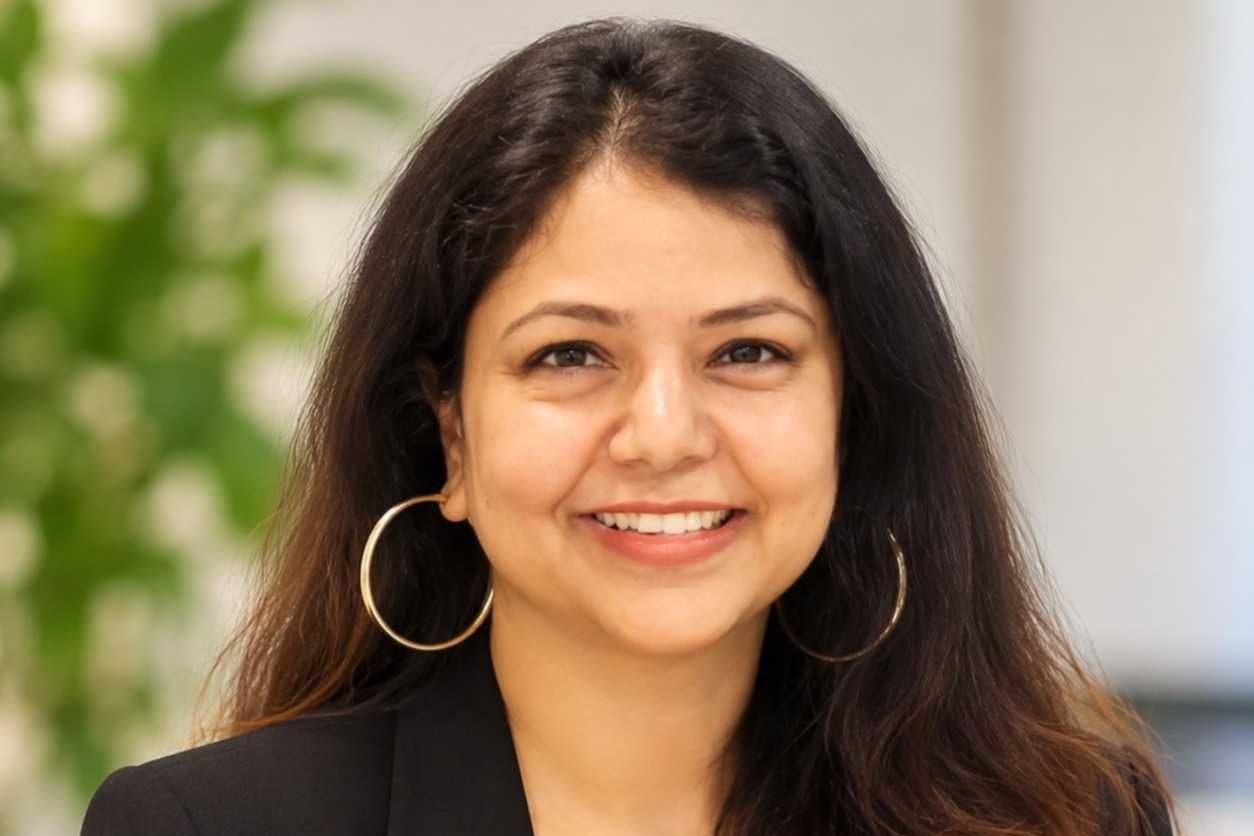
"My son would ask me, 'It was so-and-so's birthday. Wasn't there a party?' And I had to make excuses," explains Dr Archana Akhaury, Founder of Social Spectrum.
As a mother, Archana couldn't change the party guest lists.
But as a technologist with a PhD in artificial intelligence, she could build something better: a community where neurodivergent children and their families are always invited.
The start of a long journey
For families navigating neurodivergence, a diagnosis is often just the beginning of a much longer journey.
Children may be referred to speech therapists, occupational therapists and other specialists, but finding a community of people who understand what the family is going through can be much harder.
For Archana, that gap became impossible to ignore.
Social Spectrum grew out of her own experience raising a neurodivergent child, wanting him to be included and wishing for a compassionate community of her own.
Drawing on her background in technology, Archana built an AI platform that connects families of neurodivergent children, helping them find friendships, support, resources and inclusive social experiences.
This makes neurodivergence less isolating for children, parents and siblings alike, and helps change how society understands neurodiversity, so children are accepted for who they are.
The missing piece
Archana brings more than 18 years of experience in technology and a PhD from the University of Melbourne. But the inspiration for Social Spectrum came from much closer to home.
When her son was diagnosed with autism at six, the family found themselves navigating a world they knew little about. They were given recommendations for therapies, but little guidance on finding other families going through the same thing.
"There was support for the child, but I felt there was a lack of support for us as a family," she says.
Her daughter faced her own challenges as a sibling, and at school her son sometimes struggled to feel included.
One experience stayed with Archana. Classmates handed out birthday party invitations, but her son was repeatedly left out.
Because he loved remembering other people's birthdays, he would often ask why there hadn't been a party, and Archana found herself making excuses.
He wasn't being bullied, but the lack of inclusion took its toll. He began to feel intimidated about going to school, and his family could see how much it affected his sense of belonging.
Archana also struggled to connect with other parents.
Facebook support groups were full of anonymous posts, which made it hard to build trust or genuine relationships, and there was no easy way to connect one-on-one with people nearby who understood.
"I thought I would build something which I wish had existed at that time when I got the diagnosis," Archana explains.
Finding a village
That idea became Social Spectrum.
Rather than another directory of services or online forum, Archana wanted a community where families could make meaningful connections, online and in person.
At its centre is an AImatching feature that helps families find others based on location and their child's age, gender, diagnosis and interests.
Like a dating app, families can browse profiles, see compatibility matches and connect with people who might be a good fit.
"But no one swipes left or right," Archana jokes, "you can browse people in your location who might have similar diagnoses or struggles as you."
Parents can also create their own groups and organise local catch-ups, from a suburban coffee morning to a get-together for children with shared interests. For families who find it hard to get out, there's a daily online community session.
There are also articles, podcasts and AI journaling, which gives parents insights into patterns in their week.
Another feature now in development uses AI to help parents understand their child's behaviours, including possible triggers and patterns behind meltdowns.
Archana knows its value first-hand: it took her family five or six years to recognise some of the reasons behind her son's reactions.
What looked like a behavioural issue was sometimes sensory discomfort, or something he was struggling to communicate.
"He would say things like, 'I don't like your face', but it might actually be the necklace I'm wearing that's causing sensory issues," she explains.
Ultimately, Archana wants Social Spectrum to be a central resource that families turn to from the moment they receive a diagnosis.
The first community
Before building a full product, Archana wanted to test whether families needed it. She shared her story in Facebook support groups, explaining why she was building the platform and inviting parents to join.
The response was immediate: around 50 to 60 families signed up within the first two or three days. She was shocked at the response.
Archana also attended disability expos in Geelong and Melbourne, including the Source Kids Disability Expo. There she noticed very few organisations addressed the social isolation families experience.
From there, the community grew through local events, word of mouth and referrals.
First friends and first celebrations
Archana began organising Christmas and Halloween celebrations, birthday parties and smaller catch-ups, giving families a relaxed space where children could take part in their own way.
One of the most meaningful milestones was close to home.
Archana organised a birthday party and invited children who had previously been left out of celebrations. Her son participated and, for the first time, found a friend he now calls his best friend.
"He now has someone to say, 'This is my best friend' when people ask him who his friends are," she says with a smile.
"At Social Spectrum events, he can stim, talk about his interests and ask questions without fear of judgement. He even asks when the next one is happening," Archana explains.
Archana has benefited too, forming friendships with parents who understand what her family has faced. "It validated my own idea," she says.
She organised an inclusive Halloween party and for some children, it was the first time they had ever experienced trick or treating. Christmas was also a successful Social Spectrum event with Santa Claus attending.
For one young girl who rarely spoke, her parents witnessed her chatting away comfortably with Santa. Her parents watched through tears.
Building inclusion beyond the platform
Social Spectrum has since grown well beyond proof of concept, with its app available and a growing network of families, practitioners and community partners.
Archana says around 500 families joined the platform in its early growth, while its newsletter reaches roughly 5,000 families and practitioners.
Partnerships are becoming central, including a collaboration with the Special Olympics. The pilot is exploring opportunities to connect athletes' families, who often don't know one another outside training.
Event sponsorships have made celebrations more accessible, after Archana found even modest ticket prices kept some families away.
She is hoping to find more sponsors and more partners to grow the platform's impact.
A founder's community
Turning a technology platform into a sustainable business is its own challenge, and Archana has found support across Melbourne's startup ecosystem.
Her journey began with Press Play, a pre-accelerator program for women founders. Then at a networking event, she met a Dubai-based advisor who helped her, as a technical founder, translate her idea into a business proposition, and who remains involved today.
At Stone & Chalk, she found a community that helped her keep building.
Connections made at hub events helped her plan and deliver the successful Social Spectrum launch event, and after she won an impact pitch competition, a practitioner she'd met through the community signed up for an annual paid membership on the spot.
At the Melbourne hub, she met Ally Kim from Pawshare Club, which led to a combined event with therapy dogs. And in Adelaide, introductions through the Stone & Chalk community there are helping Social Spectrum expand its reach.
"It's not only the networking and knowing other people. It's the different events which can help me grow," she says.
A more inclusive future
Archana wants Social Spectrum to become a global platform. The team is preparing the app for a broader rollout, building awareness city by city rather than assuming every market looks the same.
Her five-year vision is bigger still. Archana wants Social Spectrum to be the go-to platform for families navigating neurodivergence, recommended alongside the other support families receive at diagnosis.
She also wants a broader shift in how society understands inclusion.
Neurodivergent and neurotypical children will share the same schools, workplaces and communities, so neurotypical families need opportunities to learn too. Inclusion can't depend solely on neurodivergent children adapting to the world around them.
What began as a mother's search for support has become a growing community built on the promise that families shouldn't have to navigate this journey alone.
Every family deserves to find their people, every child deserves to feel included, and everyone deserves a place where they can be themselves.
