
If you want a glimpse of where the world’s energy system is heading, you don’t need to look to Silicon Valley or Berlin. You just need to look a little closer to home.
South Australia has become one of the most advanced energy systems on the planet — not because it initially set out to be a global leader, but because it had to adapt faster than everyone else.
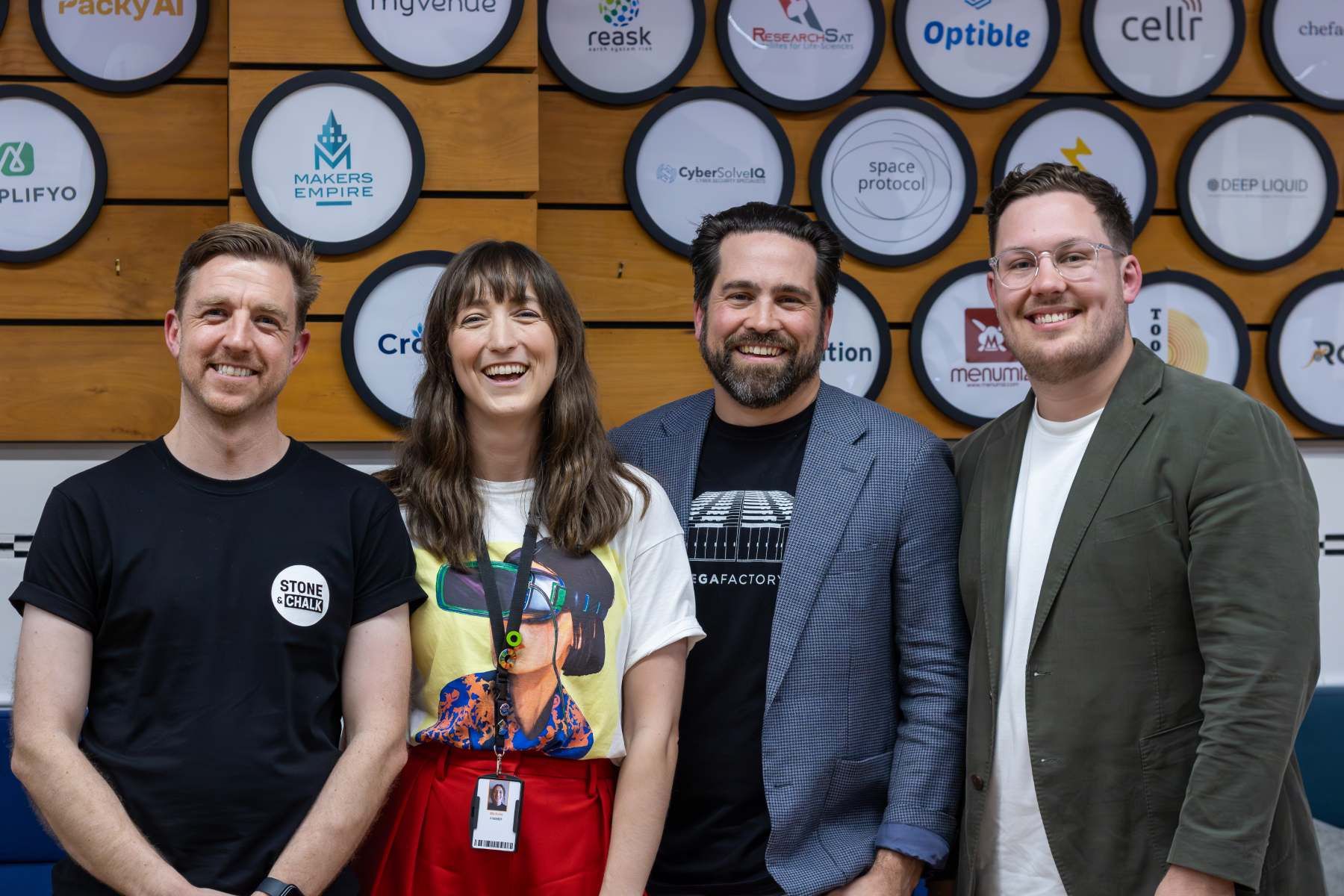
That was the clear takeaway from a recent panel discussion hosted by Ben Colley, General Manager of Stone & Chalk in South Australia. Joining him were three experts working at the edge of the energy transition:
- Blake Ashton – Energy Transition Strategy Lead, SA Power Networks
- Michelle Howie – World Energy Council Future Energy Leaders
- Shane Bannister – Tesla Energy, Asia-Pacific
Here’s what you need to know about where the future of energy is headed.
The state of renewable power
On an average sunny day, South Australia produces more electricity than it needs from renewable sources like solar and wind. Over a full year, 72% of the state’s electricity comes from renewable sources.
That’s a huge achievement, but it also creates a whole new set of problems no one had to think about 50 years ago.
“Our grid is operating in conditions most places haven’t experienced yet,” Blake explained. “High renewables, low demand, and massive amounts of rooftop solar.”
Traditional power grids were designed around big coal or gas power stations sending electricity in one direction – out to homes and businesses. South Australia’s system now works more like a web, with electricity flowing in all directions from rooftops, batteries, wind farms, and large-scale solar plants.
The state proves that when the old rules stop working, innovation is necessary for survival.
How South Australia became the world’s testing ground
It’s impossible to talk about South Australia’s energy story without mentioning the now-famous twitter exchange between Elon Musk and Mike Cannon-Brookes.
What began as a public dare quickly turned into a real infrastructure project, and the Hornsdale Power Reserve, then the largest lithium-ion battery in the world, was built in record time.
But that moment didn’t come out of nowhere. Shane Bannister was quick to point out that South Australia had already laid the groundwork years earlier. By 2016, the state had already invested heavily in wind and solar, long before many other regions were willing to take the leap.
That early commitment is why Tesla now uses South Australia as a proving ground for new technology. “We do things people say aren’t possible,” Shane said.
What happens here doesn’t stay here. Lessons learned in South Australia have helped shift how the world thinks about batteries, not as passive backup systems, but as active tools that can stabilise and support the grid.
Power is a people problem
For all the talk of solar panels, batteries and electric vehicles, one theme kept coming up: the hardest part of the energy transition isn’t the technology. It’s people.
One example is vehicle-to-grid technology. In simple terms, it allows electric cars to act like mobile batteries. They can charge up when there’s lots of cheap solar power, then send electricity back to the grid when demand spikes.
On paper, it sounds brilliant. But in real life, with real people, it’s emotional and complicated.
Blake summed up the emotional barrier the public face with a simple question he often hears: “Why would I want my car drained? What if I need to get to the hospital?”
The fear is understandable. People need to trust that the system won’t leave them stranded, especially in moments that matter most.
There’s also a behaviour gap. Many electric cars sit in workplace car parks during the day — exactly when solar power is abundant. But they’re plugged in at home at night, when demand is high and renewable supply is lower.
That behaviour makes sense for households, but it doesn’t help the wider system.
So the solution won’t be instant. It will come through gradual steps: smarter charging, cars powering homes, and clear safeguards that help people feel safe making the change.
Nobody wants to think about energy
One of the most honest moments of the night came when Blake summed up the challenge facing energy providers.
“We’re asking customers to be more and more engaged,” he said, “at a time when people have less and less brain space to care about energy.”
Most of us don’t want to become mini energy traders. We want the lights on, the car charged, and a bill that stays about the same each month. That’s why Blake kept returning to a simple idea: technology should absorb complexity, not pass it on to people.
Michelle Howie agreed, warning about what happens when choice becomes overwhelming. Too many options lead to “analysis paralysis” – that frozen feeling where doing nothing feels safer than making the wrong decision.
She also compared today’s energy transition to the early days of ride-sharing apps. “Getting into a stranger’s car went against everything you teach your kids,” she said. “Now it’s completely normal.”
Behavioural shifts can happen, but they take time. The technology must support it, rather than expecting people to change all at once.
Why South Australia moved faster than the rest
So why did all this happen in South Australia? The panel didn’t credit a single breakthrough or miracle policy. Instead, they kept coming back to something far less glamorous: consistency.
For more than two decades, South Australia has had sustained, forward-looking energy policy across both sides of government. While energy became a political football elsewhere, the state kept moving in the same direction.
When the statewide blackout hit in 2016, it could have triggered a retreat from renewables. Instead, it accelerated change. “Never waste a good crisis,” Blake added.
That consistency gave investors confidence. And once capital moves, it’s very hard to stop. As Shane put it, “the world’s biggest pension funds are pouring capital into renewables. No amount of political swinging is going to stop that.”
At that scale, the transition is no longer an ideological debate, but an economic reality.
The hardest work is still ahead
Despite how far South Australia has come, no one on the panel pretended the job was done.
Michelle pointed to a stubborn reality: progress slows as you get closer to the finish line. “Last year it was about 72%… and this year we’re on track for like 73%. How do we actually unlock that last 25% to get to 100% renewables?”
That last stretch is the hardest. It involves long-term energy storage, keeping the grid stable through extended cloudy or windless periods, and redesigning markets built for a completely different era.
Blake reinforced that now, much like before, there “is no silver bullet”. There are multiple layers, like physics, markets, behaviour, and regulation, and progress needs to happen across all of them.
Why we must work together
One of the most interesting insights came from how SA Power Networks operates. Despite being central to the grid, it isn’t allowed to own power stations. That means many solutions sit outside its direct control.
Instead of fighting that, the organisation works closely with governments, startups, researchers and energy companies.
“There’s lots of problems to solve,” Blake said. “No one needs to be precious about who does what.”
That openness has helped South Australia run trials, test new ideas and learn quickly. In a system this complex, collaboration is the only way forward.
Final thoughts
If you’re working in energy, climate, or anything close to it, the message from the night was simple.
The toughest problems are the ones that truly matter — even when they’re slow, complex, and uncomfortable to solve.
No single company, government, or technology can fix the energy system alone, and real progress only happens when people are willing to work together and share responsibility.
New technology on its own won’t do the job either. People need to feel safe, confident, and comfortable changing how they use energy and trusting that the system will work for them. The biggest wins will come from solutions that feel simple, reliable, and easy to use in everyday life.
South Australia doesn’t have all the answers yet. But it’s asking the right questions earlier than most, and learning faster because of it.
