
Every year, when March 8 rolls around, the world stops to celebrate International Women’s Day. But once the posters come down, how much has changed for the woman sitting at her desk building the next great Australian company?
On paper, Australia’s tech scene is on the rebound. Artificial intelligence, clean energy and medical breakthroughs are booming, with some incredible startups attracting ten-figure investments.
Yet a gap persists. According to the State of Australian Startup Funding Report 2025, women still receive only a small share of startup investment, with 24% going to mixed-gender founding teams and just 2% to all-female teams.
Female founders are often locked out of old networks where the biggest deals are struck, and are regularly expected to demonstrate revenue and traction far earlier than men, just to get a seat at the table.
Stone & Chalk’s International Women’s Day Scholarship was created to help remove some of this friction for female founders. Now in its fifth year, we received a record 163 applications for the 2026 cohort and, due to the quality of applicants, we doubled our six available places to twelve.
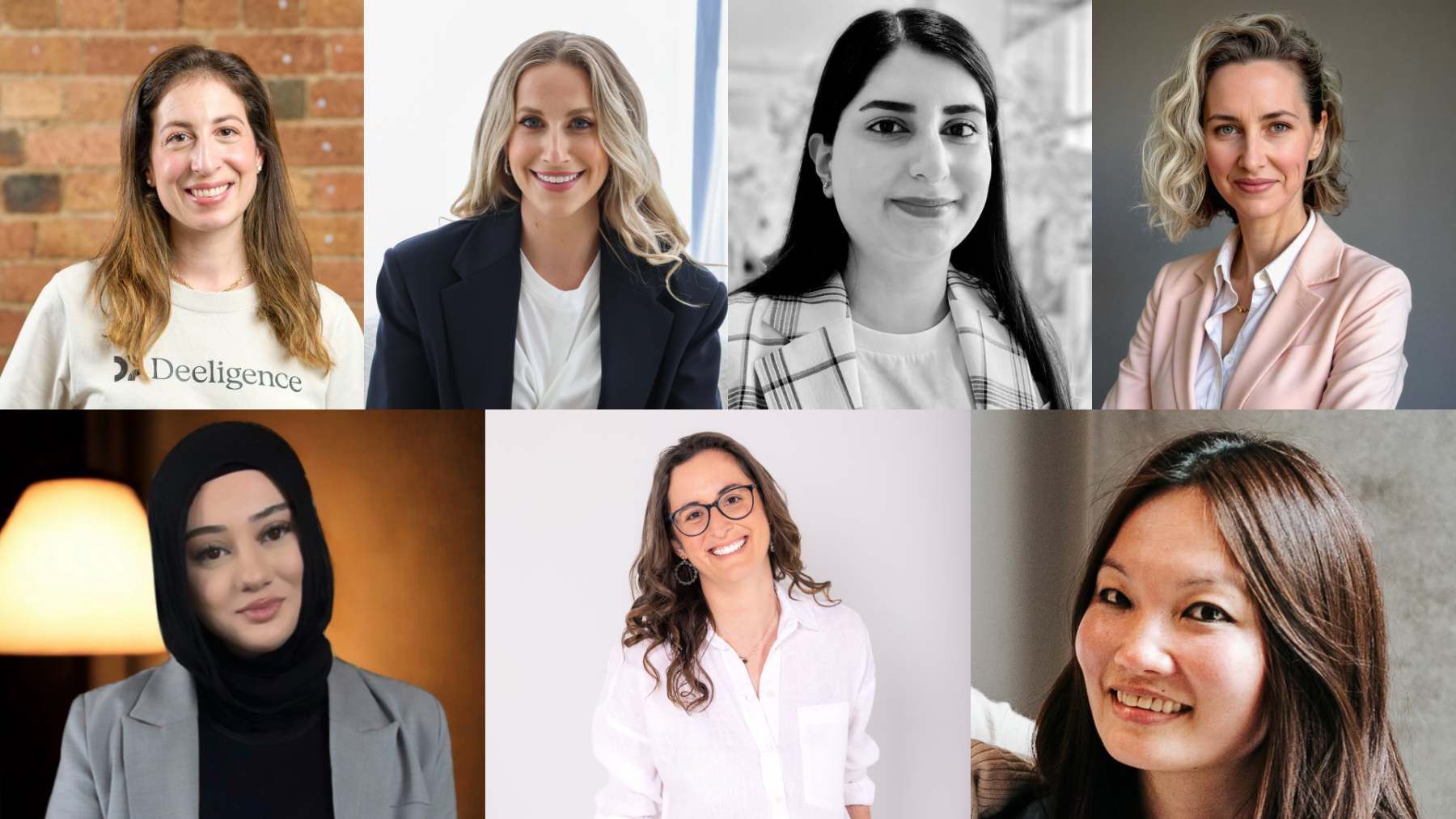
Today, we share the stories of our 2026 recipients – the inventors, the coders, and the leaders who are building Australia’s future.
What the IWD scholarship offers female founders
Behind every statistic is a real person.
The brilliant scientist pitching to a room of investors, where she is the only woman. The founder explaining her technology for the fifteenth time that week to people who still ask whether she has a ‘technical co-founder’.
These moments are common for many female founders.
To help ease some of these pressures, each International Women’s Day Scholarship recipient receives:
- A 6-month membership at one of our national Stone & Chalk hubs
- Access to a modern workspace for focused, collaborative work
- Entry into Stone & Chalk’s national innovation community, spanning founders, mentors, investors, and industry experts
- Invitations to programs, events, and workshops focused on building sustainable, scalable businesses
- Ongoing opportunities to learn from peers and experienced founders
Together, these resources give our cohort the support, network, and space they need to grow their companies faster.
Meet the 2026 IWD cohort
This year’s winners represent the best of Australian ingenuity. From Sydney to Adelaide, these twelve women are tackling some of the world’s hardest problems.
Sydney
1. Janine Owen – Grant’d
Grant’d helps businesses find and secure funding faster, acting like a matchmaker that guides them to the right grants and manages the entire process in one place.
2. Fatima Arifeen – Voltaire Legal
Voltaire Legal uses AI to organise pro bono programs, making it easier for legal teams to help people who can’t afford a lawyer and expanding access to justice.
3. Karen Perks – MiKare Health
Medical information is often scattered across different hospitals and systems. This can make it hard to see the full picture of a patient’s health. MiKare gives people a safe way to store and manage their own medical data.
4. Laetitia Andrac – Understanding Zoe
Understanding Zoe is for families with neurodivergent children (such as those with autism or ADHD). It connects parents, teachers, and therapists in one hub so everyone stays on the same page to provide the best support possible.
5. Chantelle Ralevska – Psyber
We all know we should use strong passwords, but how many of us actually do? Psyber focuses on the human side of cyber security, teaching people how to change their habits to stay safe online.
6. Dunya Hassan – BrailleGPT
Dunya is using the power of AI to help people who are blind. BrailleGPT is a portable device that can read the world, translating speech, text, and even surroundings into Braille or audio feedback in real time.
Melbourne
7. Helena Ngo – Raffy Allergy
For families dealing with severe food allergies, Raffy Allergy is a mobile app that acts as a bridge between the doctor’s office and the dinner table, helping build allergen immunity.
8. Elena Tsalanidis – Deeligence
When companies merge, lawyers must review thousands of documents for due diligence. Deeligence uses AI to automate and accelerate this process so it can be completed in a fraction of the time.
Adelaide
9. Ragya Kaul – NoMind Systems
Most technology today relies on the cloud, but what if you’re working in a high-security mine or defence base with no internet? NoMind builds software tools for these offline environments to keep critical infrastructure running safely without a web connection.
10. Marissa Bond – Thinking Mode
Thinking Mode helps teachers verify that students understand their work. It asks students to explain their reasoning in a secure chat, making sure they are learning with AI, not just copying from AI.
11. Michelle Verco – Flaiver
Flaiver is a RegTech company that helps banks predict financial risks more accurately. By using shared intelligence, Michelle is helping banks move away from old, clunky systems to modern, safer ones
12. Storme Paes – Elemental IV
Australia often relies on overseas shipping for basic medical supplies like IV saline. Elemental IV is building Australia’s first modular factory to manufacture these essential medicines locally so hospitals never run out.
A beginning, not a finish line
International Women’s Day is often seen as a celebration, and it should be. We should cheer for how far we’ve come. But progress is built through consistent action, not just one day of recognition.
Our scholarship reflects a simple belief: talent is everywhere, but opportunity is not. By giving these founders a leg up today, we move closer to closing the gap tomorrow.
In a startup, being alone is a liability. The best way to solve a problem isn't by Googling it, it’s by hearing how the person at the next desk solved it. These small, everyday moments rarely show up on a business report, but they’re often the secret ingredient to success.
Over the next twelve months, this cohort will face huge challenges. Some will grow their companies. Others may pivot and change their entire business model. All of them will learn.
To Janine, Fatima, Karen, Laetitia, Chantelle, Dunya, Helena, Elena, Ragya, Marissa, Michelle and Storme – congratulations! Australia’s future looks brighter with you in the driver’s seat.
