
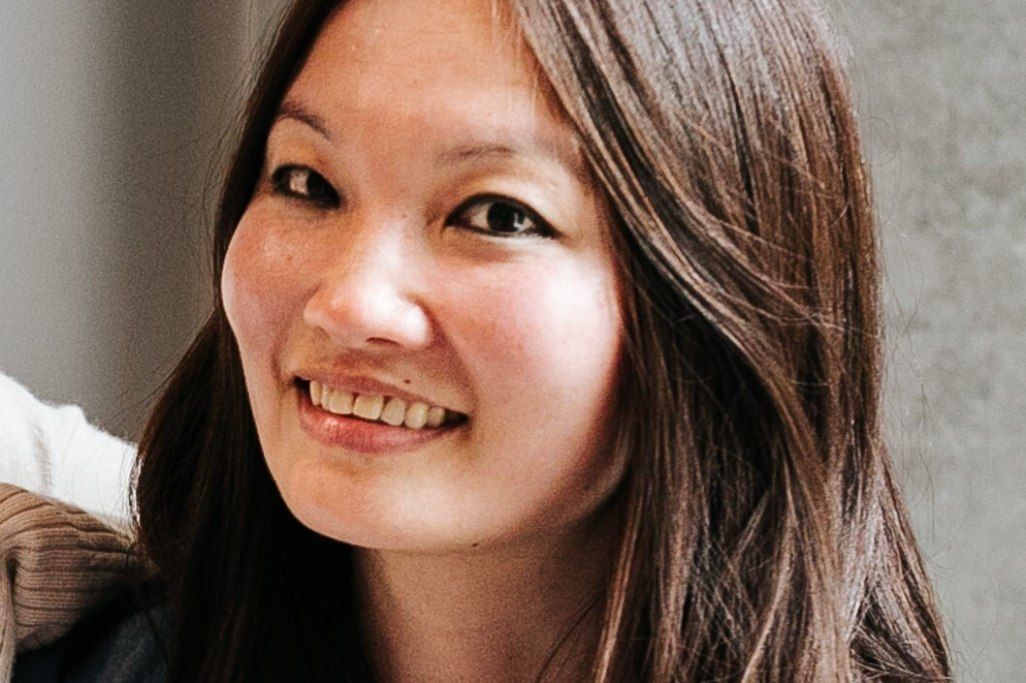
“I’ve lived this challenge for 13 years,” says Raffy founder Helena Ngo.
With a clear-eyed understanding of what families need day to day, Helena set out to build a solution for the hundreds of thousands of households that must navigate severe food allergies.
The result is Raffy, a digital health platform that supports families undertaking treatments like oral immunotherapy, helping them follow complex, clinician-led protocols confidently at home.
What began as a deeply personal journey is now evolving into a tool with the potential to change what’s possible for families living with food allergies.
Fear turned into realisation
For Helena, Raffy started as a moment of clarity.
She still remembers it vividly. Her young son was eating a simple snack when she noticed something wasn’t right. His lips began tingling. They quickly turned bright red and swelled dramatically.
As a parent, it was confronting. “You go into action,” she recalls.
That moment marked the beginning of 13-year journey navigating food allergies: one that required vigilance and learning, and ultimately sparked a determination to create better support for families.
Unlike many families in the allergy community, Helena and her husband didn’t have allergies themselves. They were learning everything from scratch such as, what symptoms meant, how to respond, what to avoid, and how to make confident decisions quickly.
At the time, the standard medical advice was clear: strict avoidance. Avoid the allergen at all costs. Carry emergency medication and hope your child grows out of it. But for Helena, that approach didn’t feel like the whole answer.
“I don’t like to leave things to chance,” she says. “I wanted a plan we could follow.”
Instead, she began exploring emerging alternatives, particularly oral immunotherapy, a treatment that gradually exposes individuals to allergens in controlled doses to retrain the immune system.
It offered hope and it also introduced a new level of complexity.
Managing a medical protocol by yourself
Oral immunotherapy represents a major step in how food allergies are treated.
Rather than avoiding allergens entirely, patients are gradually exposed to them over months or years, with the goal of increasing tolerance to reduce or prevent severe reactions.
While the treatment is clinically guided, much of the work happens at home. That’s where the challenge begins.
Families are required to manage highly precise protocols including tracking doses, timing, symptoms, environmental factors, and potential reactions.
They must monitor variables like illness, exercise, and asthma control, while also preparing allergen exposures safely and consistently.
All of this often happens in the middle of everyday life; while cooking dinner, caring for other children, or simply trying to keep up with the day.
“It’s a lot of cognitive load for parents,” Helena explains. “But with the right structure, it becomes manageable.”
Many families rely on a patchwork of tools such as notes apps, timers, spreadsheets, pen and paper, to manage the process. But these systems are fragmented, making it difficult to spot patterns or feel confident.
And when things aren’t clear, progress can slow. “If you’re unsure, your instinct is to pause,” she says. “Families want to do the right thing and they need support they can trust.”
Bridging the gap between clinic and home
Raffy was created to solve this exact problem.
At its core, the platform is a daily dose and symptom tracker delivered through a mobile app, designed to bridge the gap between specialist oversight and at-home execution.
Instead of juggling multiple tools, families can follow a structured, guided process that integrates tracking, timing, and context into a single system.
“It takes that precise work and turns it into a daily habit,” Helena explains.
The app captures key data points such as dosing schedules, symptoms and environmental factors then translates them into clinician-ready summaries.
This means that when families attend specialist appointments, they’re no longer relying on memory or scattered notes. Instead, they have clear, structured insights to guide decisions.
Importantly, Raffy is designed to support, not replace, clinical care.
Built from lived experience and deep expertise
While Raffy is deeply personal, it’s also grounded in Helena’s professional experience.
Before founding the company, she spent nearly two decades working across pharmaceuticals, consumer healthcare and food industries, building expertise in regulated environments, product safety and building products people love.
That background has shaped how Raffy is being built.
It’s not just about creating a helpful tool, it’s about ensuring it meets the standards required in a highly regulated environment, while still being usable for families in real-world settings.
A name with meaning
Even the name ‘Raffy’ carries personal significance.
It was inspired by a plush giraffe named Raffy gifted to Helena’s son as a baby. Raffy sat quietly in his room, a kind of symbolic guardian watching over him. Helena was adamant the name of the app had to be something a two-year-old could pronounce and Raffy seemed the perfect option. She wanted a toddler to be able to say, “Raffy is helping me”.
Today, Raffy represents that same sense of safety and reassurance. It’s something families can rely on as they navigate an often-overwhelming journey.
It's also an acronym that stands for “Real Allergy Freedom for You,” reflecting the broader mission behind the platform.
Early traction and growing demand
Although still in its early stages, Raffy has already shown strong signs of impact.
Initial pilot programs engaged families and clinicians across multiple states, with feedback confirming both the need for the solution and its value in practice. “There’s no comparable tool in Australia,” Helena notes.
The next phase focuses on refining the product through user feedback, with a broader launch planned as the platform matures.
Building through community
Raffy’s growth has also been supported by the startup ecosystem, including recent involvement with Stone & Chalk. For Helena, the experience has been transformative.
“It’s opened doors,” she says. From speaking opportunities to introductions and pitch competitions, the network has helped raise awareness of Raffy at a critical early stage.
Just as importantly, it has connected her with others who understand the journey, both professionally and personally.
A bigger vision for allergy care
In the short term, Helena’s goal is to ensure that every family starting a home dosing protocol such as oral immunotherapy, or allergen ladders has access to Raffy, so they don’t have to navigate the process alone. But the opportunity extends far beyond Australia.
Despite having one of the highest rates of food allergies in the world, Australia represents just a small part of the global challenge. With millions of families facing similar experiences, the potential for impact is significant.
Ultimately, Raffy is about more than technology. It’s about giving families confidence, reducing uncertainty and helping children not just stay safe, but thrive.
For Helena, that mission is deeply personal, and it’s only just beginning.
