
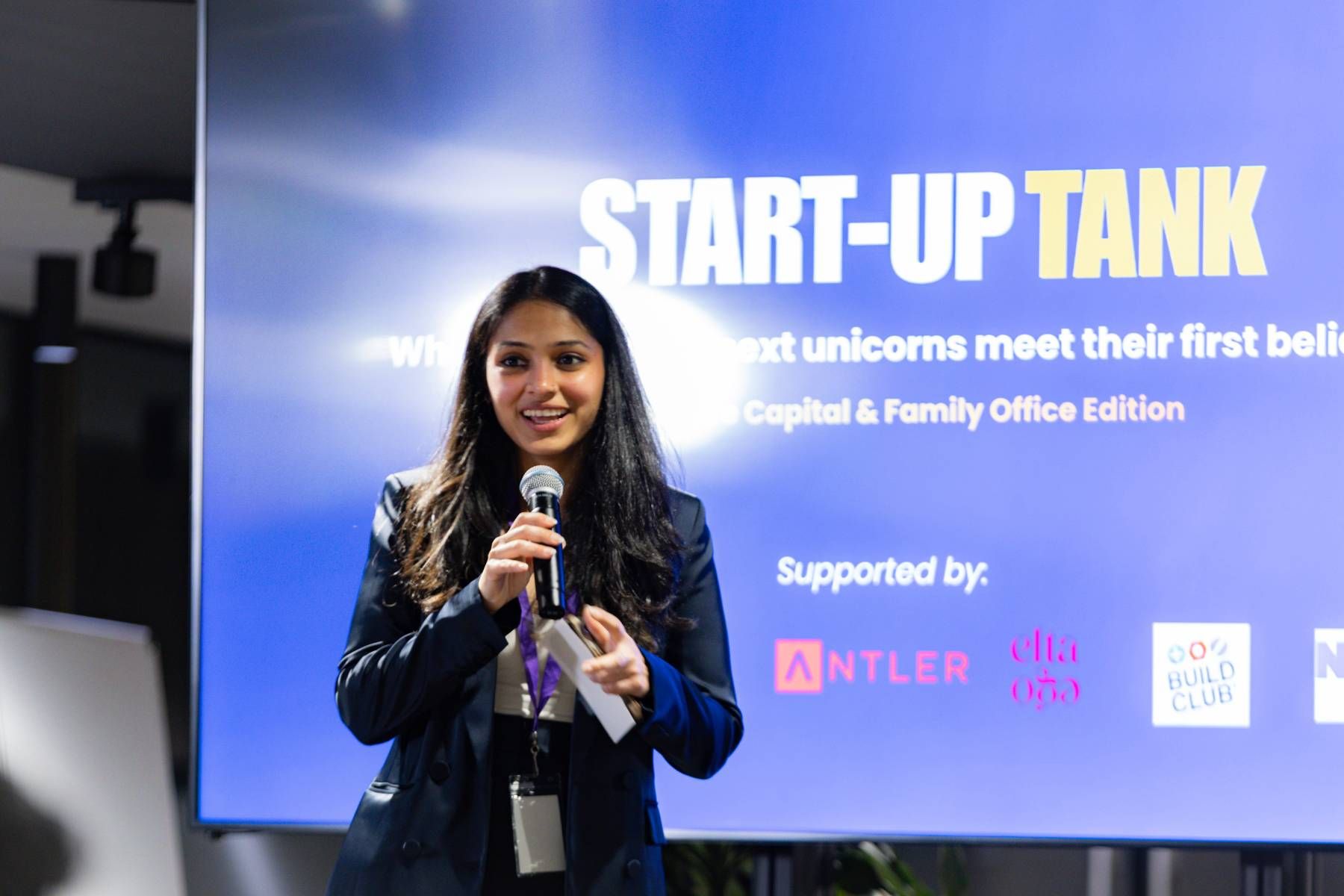
"If I hadn't been laid off, I wouldn’t have turned my passion project into a startup," Sara Singh Tak, Founder of Humans of Australia says.
For many Australians, the startup ecosystem can feel difficult to access. Founders often struggle to raise investment and early-stage companies compete for talent.
Startup news is scattered across different publications and many promising businesses go unnoticed until they've already become household names.
Humans of Australia is changing that. The digital-first independent media platform shines a spotlight on Australia's startup, technology and investment ecosystem through founder stories, industry news and community events. But its ambitions extend well beyond publishing content.
Through initiatives such as Startup Tank, which connects early-stage founders with investors, and Humans Who Hire, which helps startups connect with talent, Humans of Australia is building an ecosystem to support founders both online and in person.
It's an ambitious vision, but one that almost never happened.
An unexpected turning point
Sara never planned to start a business.
Like many young professionals, she was happy building a career in digital marketing. A full-time job offered security, a steady income and a clear career path.
"I never wanted to be a founder in the first place," she says.
In 2022, she started Humans of Australia as a passion project. At the time, it wasn't a business. It was simply a place to tell inspiring stories about people across Australia: their lives, careers and experiences.
"I found storytelling really inspiring," Sara says. "It was an easy way to connect with people."
For two years, the platform quietly grew alongside her full-time career. Then everything changed when Sara was suddenly made redundant.
Like many people who unexpectedly lose their jobs, she suddenly found herself wondering what came next.
It was her partner who encouraged her to see the setback differently.
"He said, 'You're young. Why don't you try building something for yourself?'" That conversation changed the direction of her career.
Rather than immediately looking for another marketing role, Sara began asking herself a different question. What if Humans of Australia could become something much bigger?
Finding a gap driven by own needs
As she explored Australia's innovation ecosystem, one thing became increasingly obvious.
There were thousands of founders building remarkable businesses, but relatively few media platforms dedicated to telling their stories before they became unicorns.
"If you're always scrolling on your phone like I am, there wasn't really one place covering startups, investment and community in a way that was easy to consume," she says.
At the same time, Sara had become immersed in Melbourne's startup community through Stone & Chalk, where she met founders tackling complex problems across technology, health, AI and climate.
Again and again she heard the same frustrations. Early-stage startups struggled to attract investors and many found it difficult to recruit talent. Despite solving meaningful problems, countless founders found it almost impossible to gain visibility.
Sara realised storytelling could help solve part of that problem.
Rather than simply reporting startup news, Humans of Australia would become a platform dedicated to making Australia's innovation ecosystem more visible, more accessible and easier to understand.
A year after making that shift, the platform has grown to more than 55,000 followers across its digital channels and continues to expand both its online reach and real-world community.
More than a media company
While Humans of Australia began as a digital publication, Sara quickly realised that content alone wasn't enough.
Media could tell stories but community could create opportunities. That thinking inspired Startup Tank.
Drawing inspiration from Shark Tank, a show Sara loved growing up, the initiative gives early-stage founders an opportunity to pitch directly to investors.
For startups, the process of securing funding can often feel like applying for hundreds of jobs. Pitch decks disappear into inboxes while applications compete with hundreds of others.
Meeting investors face-to-face creates a very different dynamic.
"I think the in-person impact is completely different," Sara says. "It's much easier for investors to understand founders when they can actually meet them."
Humans of Australia has since expanded into community events that connect founders, investors and talent, creating opportunities that extend beyond what can happen on social media alone.
Making complex ideas human
Although the platform covers startups, technology and investment, Sara believes its real purpose is much simpler. It's about storytelling.
Many startup founders naturally speak in technical language and investors often discuss markets, valuations and funding rounds.
Sara sees her role as translating those conversations into stories ordinary people can understand. That philosophy shapes every piece of content Humans of Australia produces.
The platform also deliberately balances business news with lighter stories covering Australian culture, entertainment and community.
"If it's only startups or only politics, people become overwhelmed," Sara says.
Sometimes, she says, people simply need a breather. That's why entertainment stories sit comfortably alongside founder interviews and investment news.
AI as a co-founder
Like many startup founders, Sara has embraced artificial intelligence, not as a replacement for creativity, but as a force multiplier.
She jokes that AI has become her "co-founder." As a first-time founder without an extensive network of mentors, AI became an early source of advice, problem-solving and research.
Behind the scenes, it also powers much of Humans of Australia's workflow.
The company has developed AI-powered systems that aggregate startup, investment and community news, helping the team identify stories more efficiently while allowing more time to focus on journalism, interviews and storytelling.
"It's about making our work more efficient," Sara says.
Building through community
Sara credits much of Humans of Australia's growth to the startup community itself.
Working from Stone & Chalk has introduced her to founders, investors and mentors who have accelerated both her learning and her business.
"I used to work from home," she says. "But being part of a community changes everything."
The relationships she's built have helped Humans of Australia grow from a small content platform into a recognised voice within Australia's innovation ecosystem.
They've also reinforced an important lesson. Founding a startup doesn't have to be a solitary experience.
Learning to say no
Like many first-time founders, Sara initially said yes to almost every opportunity.
Sometimes because she needed the revenue, sometimes simply because she didn't yet know what kind of business she wanted to build.
Over time, she realised that saying yes to everything meant drifting away from the original purpose behind Humans of Australia.
"The biggest lesson I've learned is that it's very important to say no," she says.
As difficult as it can be for early-stage founders, protecting your values is often more important than chasing every opportunity.
Her second lesson is equally important. Don't undervalue yourself.
"It's very easy to undervalue yourself because you're new," she says. "But you have to back what you do."
Those lessons have become the foundation of both her business and her own confidence as a founder.
Looking ahead
Sara's vision reaches far beyond growing another media brand.
She wants Humans of Australia to become the country's leading independent digital media platform for startups and investment.
When founders think about raising capital, she hopes they'll think of Startup Tank. When Australians want to understand innovation, she wants them to think of Humans of Australia.
Looking back, she says it's difficult to imagine that none of it would have existed if she'd never lost her job.
Sometimes, the biggest setbacks quietly become the opportunities that change everything.For Sara, redundancy didn't mark the end of one career, it became the beginning of another.
A career built from her own passions, one dedicated to helping Australia's founders tell their stories, build their businesses and connect with the people who can help them succeed.
