
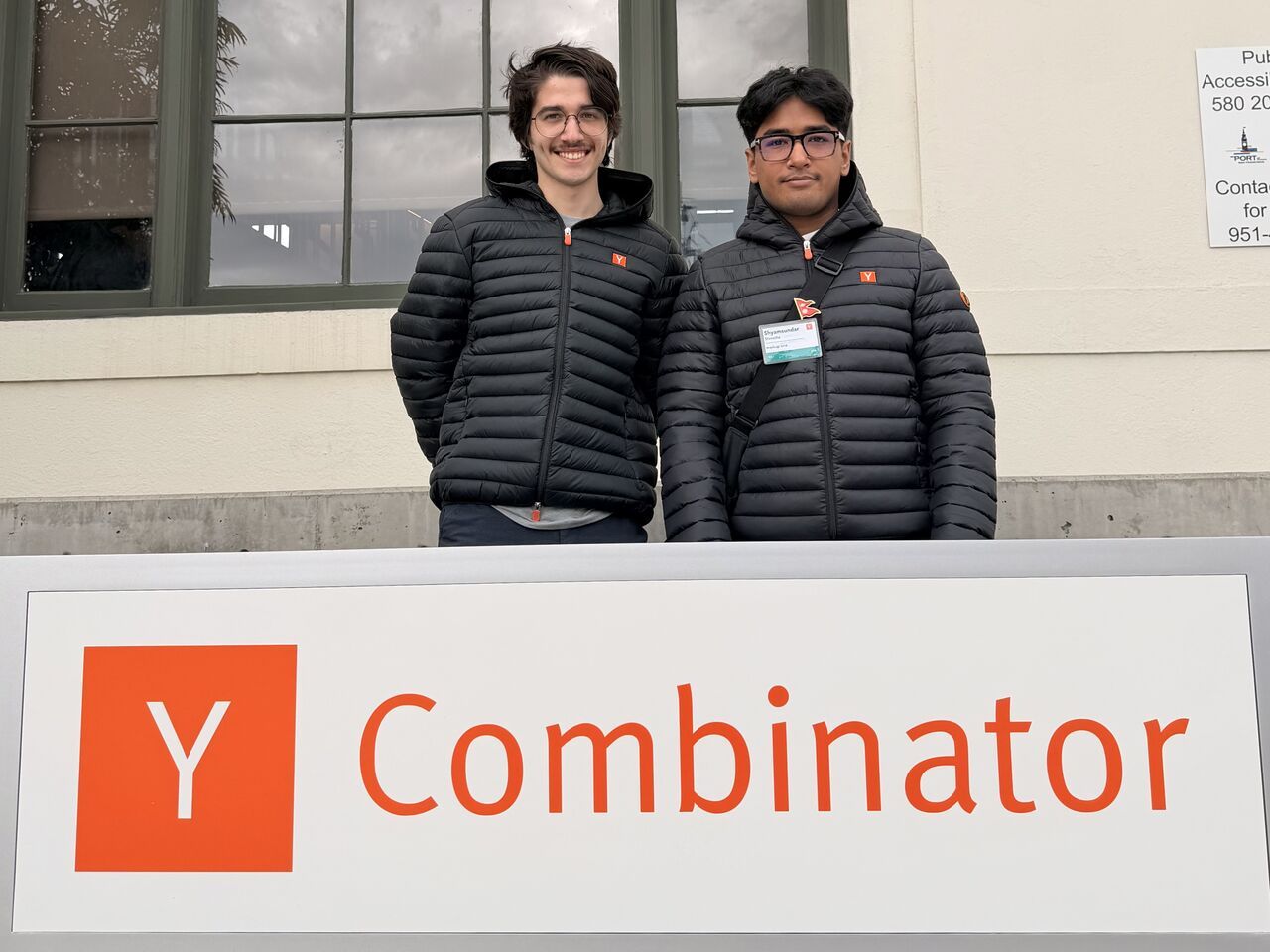
Adelaide startup markup.one has been accepted into Y Combinator’s Spring 2026 batch, one of the most competitive startup programs on the planet.
The company was founded by Shyamsundar Shrestha, a 23-year-old artificial intelligence specialist, and Cyrus Kelly, a 19-year-old Chief Student Entrepreneur at the University of Adelaide.
That acceptance brings a US$500,000 investment from the acclaimed Silicon Valley accelerator and places the founders inside a cohort selected from tens of thousands of applicants worldwide.
It also makes Cyrus one of the youngest founders to enter the program in its two-decade history. And they pulled it off in under 90 days.
The 90-day startup
The idea for markup.one was born during the University of Adelaide’s eChallenge, a long-running pitch competition for emerging startups.
But this was no flash of beginner’s luck.
Before landing on markup.one, Cyrus and Shyamsundar had already built eight startups between them across three years. That repetition gave them a rare skill for founders their age: instinct. They had seen enough ideas to recognise when one had real heat.
So when markup.one showed early traction, they moved fast.
“Neither of us has ever felt more confident going into something than we did with markup.one,” says Cyrus.
Within three weeks, they had moved into a shared apartment to strip away the lag between idea and execution. Their living room became a late-night war room and their focus narrowed to a single growing pain point that faces modern marketers.
The trap inside modern marketing
Marketing teams are producing more content than ever. Generative AI tools like Midjourney and OpenAI’s DALL·E have made it possible to create polished images in seconds.
The scale of that move is enormous. Adobe reports that 96 per cent of marketers have seen content demand double, while 62 per cent say it has increased fivefold in the wake of the generative AI boom.
But speed has introduced a fresh layer of friction.
Most consumer AI image tools produce a finished asset that looks polished on the surface but breaks under pressure. A logo sits a few pixels off. The font misses the brand. The dimensions suit LinkedIn but fall apart on Instagram. And once that happens, teams are thrown back into manual design.
The result is a new kind of bottleneck: companies can generate more content than ever, but making that content usable still takes time, labour, and skill.
“The way people create marketing content is fundamentally changing,” Cyrus explains. “Static design tools weren’t built for a world where brands need hundreds of personalised assets a day. We’re building the infrastructure for what comes next.”
Building the infrastructure for what comes next
Markup.one collapses the design timeline from hours into seconds.
Instead of opening a dense design program and starting from a blank canvas, users describe what they need in plain English. The platform generates a finished design – but the real breakthrough is what happens next.
The file stays alive.
Every output remains fully editable inside a dynamic workspace. Text can be rewritten, layouts can be reworked and colours can be refined. The asset behaves less like a sealed image file and more like a living, layered document.
In practice, the platform acts like a design assistant that handles the first 80 per cent of the heavy lifting, giving teams speed without surrendering control.
Users can also upload brand assets such as proprietary fonts and logos, allowing outputs to stay tightly aligned with existing visual systems.
That gives smaller companies the ability to move at algorithmic speed while holding onto the kind of polish and consistency that large enterprises spend millions to protect.
Y Combinator puts a rocket under the opportunity
An acceptance into Y Combinator is one of the clearest signals a startup can receive.
The accelerator famously backed Airbnb, Stripe, Dropbox, and Reddit in their earliest chapters. Collectively, Y Combinator alumni are now valued at more than US$1.3 trillion.
Its reputation comes from two things: brutal selectivity and its ability to compress years of learning into a few months of ruthless focus.
“Y Combinator represents the highest standard globally for early-stage startups, and we’re proud to be building a world-class AI company from South Australia,” says Cyrus.
The founders will now relocate to San Francisco for the Spring program, where they will refine the product ahead of Y Combinator’s famed Demo Day – the moment they step into a room packed with some of the world’s most influential venture capitalists.
A global stage, built from Adelaide
For anyone who has watched these founders building at Stone & Chalk in Adelaide, the milestone feels earned.
Cyrus is quick to credit the local community that helped markup.one reach this point. Stone & Chalk played a major role in preparing the team for the intensity of the Y Combinator interview process, and local mentors, ecosystem leaders, and programs helped shape the founders’ thinking and direction.
While markup.one may be the first Adelaide startup to publicly announce its place in the program, Cyrus believes it will not be the last.
Adelaide’s startup ecosystem is growing. Founder communities are deepening, university programs are producing heightened talent, and we’re seeing more founders going further, faster than ever before.
Founders like Cyrus and Shyamsundar are showing what that path can look like. The next chapter of markup.one will unfold in the tech corridors of Silicon Valley. But the story started here, in the heart of innovation in Adelaide.
