
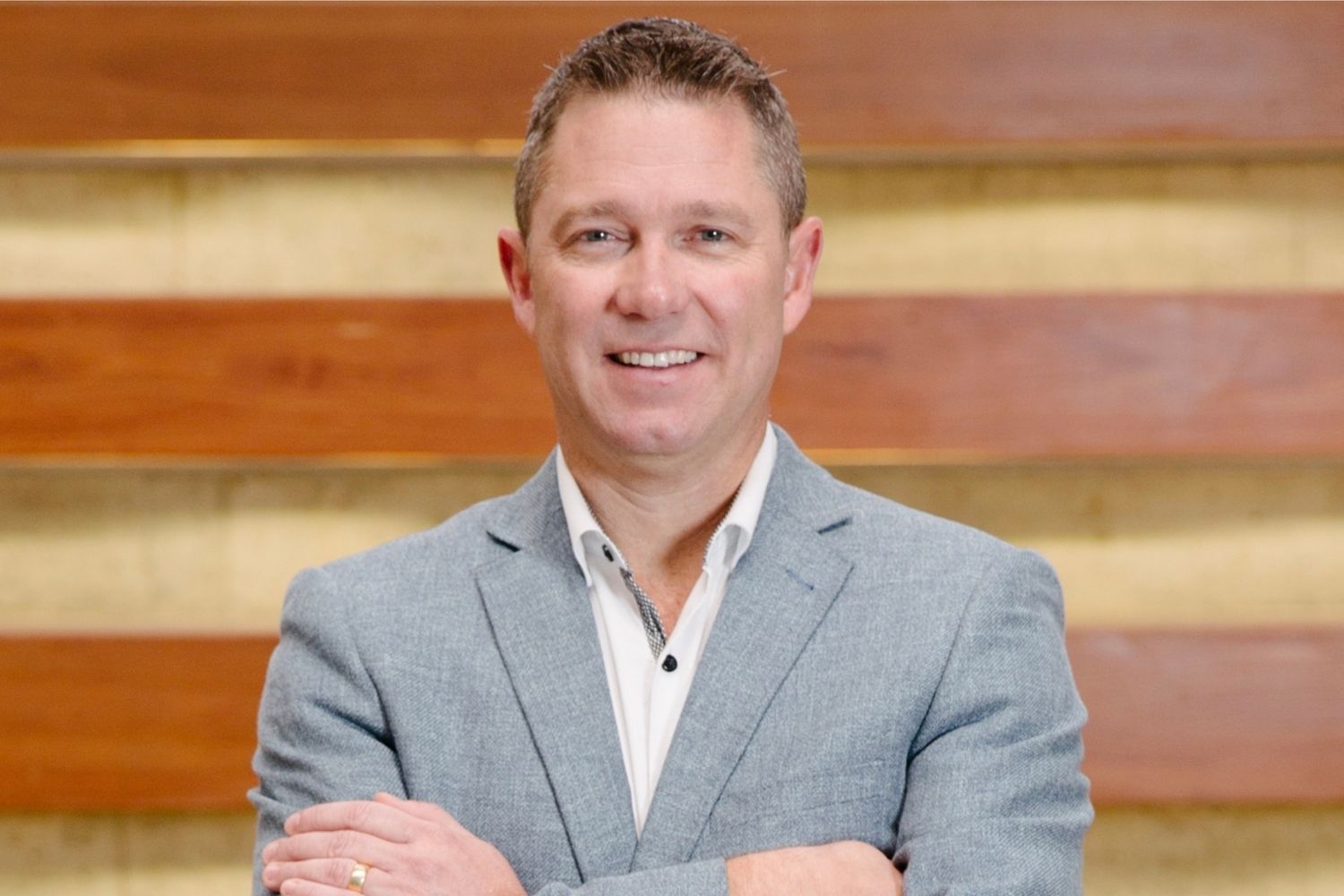
Scott King is waiting to board a flight to Las Vegas.
In just a few days, he’ll step under hot studio lights to pitch his startup Zapme on the international reality show CryptoKnights.
But before his boots even hit the ground in Nevada, he has one huge gamble to make.
Scott’s about to pull Zapme off Amazon Web Services, the platform keeping the app online, and move it to a global network of independent computers.
It’s the technological equivalent of swapping out a race car's engine while driving to the starting line. Yet, Scott remains confident it’s the right decision.
Zapme began as a way for travellers to buy phone numbers and mobile data across borders. Now he wants it to become a place where you can call, message, post and build a community without losing control of your life online.
A lifetime of building around problems
Back in 1996, Scott was buying thousands of phone cards in Tampa, Florida, and selling them on cruise ships to crew members desperate to hear a familiar voice from home.
When those same workers arrived on the icy docks of Alaska with cards to use but nowhere easy to call from, Scott opened an internet café called Connections.
“I look at the situation and go, ‘you can do it,’” says Scott. “There's always something that you can make better.”
Years later, when he was managing a convention centre in the desert with severe plumbing issues, he started a portable toilet company. When he noticed his wife’s silk dress would slip off its hanger, he set out to develop a clothes peg with a built-in hook.
"It's not about the money - because you never know if it's going to be worth anything," Scott says. "For me, the interesting thing is: can it be done?"
A call on the banks of Lake Lucerne
In 2020, during the early months of the pandemic, Scott was living in Switzerland.
He carried his passport everywhere. Taped inside the cover was a mosaic of SIM cards from Denmark, Sweden, Switzerland and the UK.
The roaming costs were outrageous. Logging into his bank accounts or crypto wallets was impossible without receiving a one-time password to the Australian number he’d been forced to cancel to avoid a $12,000 bill.
He sat on the grassy banks of Lake Lucerne, staring at his frozen phone screen, entirely locked out of his own digital life. There he muttered the question that would launch a company: "Why can't this just work?"
A person could beam currency across the globe via PayPal in seconds. They could message a friend in Darwin from a café in Rome using WhatsApp.
Why couldn’t a single app handle your phone numbers, your data, and your calls, no matter what border you crossed?
He started building to solve the problem
When the airports reopened, Scott returned to Australia and found a base at Stone & Chalk in Adelaide.
“For a lot of people, Stone & Chalk is where they get their leverage,” Scott says.
He spent the next three years working out of the Adelaide hub, deep in the pipes of global telecommunication.
“It was a monster,” he says. “We had to aggregate hundreds of telcos around the world for phone numbers and data.”
What emerged was Zapme, an app that lets you buy a working phone number and data connection for almost any country in the world.
Say you’re standing on a sunbaked cobblestone street in Madrid. You pull out your phone, open Zapme, and call your mum back home in Australia.
Half a world away in Sydney, her mobile buzzes and lights up on the kitchen counter. She picks it up, puts the phone to her ear, and hears your voice coming through as if you were only a suburb away.
"We're a one-way system, which is super important," says Scott. "It's not like WhatsApp where you both need to be plugged into the same platform.”
More ways to communicate
As Zapme launched in 2024, Scott saw it could be more than a travel tool: a second number acts as a buffer for your daily life.
If you’re selling a couch on Facebook Marketplace, strangers aren't blowing up your personal number at midnight. On dating apps, you can give it out, and simply wipe it from existence the moment you get the ick.
Globally, there are now more mobile phone subscriptions on Earth than human beings. Three hundred million people exhausted on multiple numbers, paying double bills, and walking through life weighed down by two separate phones.
“Get yourself a Zapme number and carry one phone instead,” he says.
Scott sees this same issue online. Think about what it takes to organise a Saturday night out. You create a Facebook event, watch it splinter into a Messenger thread, and inevitably spawn a WhatsApp group to debate dietary restrictions.
So Scott set out to build a social layer inside Zapme to pull these threads together.
“You don't have to go around to all these different platforms,” says Scott. “You’ve got your own community.”
The communities are called ZapZones. They contain vertical videos, group chats, comment threads, and digital neighborhoods – all living inside Zapme.
Within eight weeks of going live, Zapme Social had 1,200 users and 117 active ZapZones, all through word of mouth.
"We haven't put any dollars in yet," he says. "From here, it's all about marketing."
Who owns the room you’re in
With the creation of a social network, Scott soon found himself staring at a new problem. On today’s internet, you can spend a decade gathering an audience, yet still remain a tenant in someone else's property under their control.
Imagine renting a huge warehouse for a party. You send the invitations, book the DJ, string the lights, and chill the drinks. By 11:00pm, the room is packed, pulsing with body heat and heavy bass.
Right on midnight, the music cuts out and the lights blast on. The landlord steps out and demands a cover charge, just so you can use the mic to speak to the very friends that you invited.
That’s the reality of life online. When Meta first tweaked its algorithm in the early 2010s, business pages with thousands of hard-earned followers suddenly saw their reach drop to a fraction overnight.
When Twitter changed hands in 2022, creators who built their livelihoods there were trapped in a whirlwind of policy chaos and fleeing advertisers.
Sometimes, Scott reveals, you’re at the mercy of the platform, and it’s not even their fault.
When you post on social media, send a message, or stream a video, that information lives in ‘the cloud’.
But the cloud isn't some weightless mist floating safely in magical ether. It’s warehouses filled with servers. These buildings sit on physical land, guzzle electricity, and are tethered to global undersea cables.
They can, and do, fail.
In 2021, an Amazon Web Services outage showed how much of the internet sits on the same foundations – as airport check-in screens went dark, delivery vans sat idle, and smart-home devices ignored their owners.
"Remember that big crash?" Scott asks. "That was Amazon holding everything up, and it all fell apart. That to me is a major risk."
The case for decentralisation
Scott’s gamble to fix this relies on ripping up our existing digital blueprint for a new process: decentralisation.
Instead of dropping your video or post into a single warehouse, Zapme splits it into thousands of tiny, encrypted pieces and spreads them across a vast network of computers.
If a power grid fails in London or a server room catches fire in Texas, your video doesn’t vanish into the ashes. The network simply reaches out and grabs identical backup pieces from a computer in Tokyo or a hard drive in Sydney, snapping your file back together in milliseconds.
“The new internet is decentralised,” Scott says. “It’s nodes, thousands, hundreds of thousands around the world.”
And because the data is scrambled and hosted around the world, Zapme cannot read your private messages, sell your details to advertisers, or lose your profile to an isolated power failure.
"We don't own your data. We don't own anything at all," Scott says. “You 100% own it.”
The hardest part is belief
Four years in, Scott admits there’s still a long road ahead: "Trying to get people to believe in something that doesn't exist. That's the hardest part."
A second phone number is easy to explain over a quick coffee. But an app that brings together phone numbers, overseas mobile data, private communities, and a new way of owning your data? That’s much harder to pitch.
The ticking clock of competition only adds to the heat.
Flashy SIM startups have exploded recently, raising mountains of venture capital and boasting billion-dollar valuations. But Scott still sees plenty of paths forward.
"eSIMs have never been our play," he explains. "It's a ticket to ride. But our tech stack for phone numbers doesn't actually need eSIM."
Scott says Zapme has moved more slowly, with a smaller team and far less money. He is now raising a Series A funding round, but admits he finds it uncomfortable to ask for very large numbers.
“I look at the company and go, ‘I think it's worth this’," he says. "But then you talk to my American counterparts and they're like, ‘no, you triple that.’”
Nobody wins on their own
Scott believes that the ultimate test of a founder is the people you choose to pull into the trenches with you.
"Founders aren't anyone without a team," he says. "I’m not going to build this all by myself, code it by myself, enjoy the champagne by myself, and celebrate by myself."
But assembling that crew requires a ruthless eye for chemistry over raw talent. Scott has learned the hard way to pass on brilliant individualists who push the harmony of the group out of sync.
"I've got rid of people because they're the wrong person in the team, even though they’re technically brilliant," he explains. "Because it disrupts everyone."
That philosophy extends all the way to how the company splits its wins. Years ago, Scott completely dismantled individual sales commissions, a move that still riles traditional tech executives.
"Salespeople go, ‘I want a sales commission because I'm the best salesperson.’ But you've got nothing to sell without your tech," Scott says. "If you win, you win as a team."
Calling himself a “jack of all trades, master of none,” Scott sees his role as a founder as mining the collective brilliance of his global team, digging out the unique ‘nuggets’ of insight each person holds.
So before he packed his bags for Las Vegas, he brought the whole Zapme team together.
He walked them through the plan to decentralise, so that everyone, from his developers right through to his investors, knew the story that could unfold and how they could contribute to it.
Almost immediately, a flood of support came back.
"I think we're at the sweet spot," says Scott. "If I had done decentralisation, social media and phone numbers two years ago, they'd probably be going, 'I don't give a shit.' But now everyone's interested."
What happens in Vegas
Scott is arranging a package to be sent to his hotel in Las Vegas. To book the delivery, the courier needs a US phone number.
He pulls out his mobile and opens Zapme.
"There it is," he says, pointing to the screen. "Bang, they can call me now."
Once filming wraps, Scott can wipe the number before he boards his next flight to the Philippines to visit his team.
And when the wheels touch down, he can pull out his phone again to let them know he’s arrived, with just a few quick taps of Zapme.
